Brown Spots on Black Skin in Martinique — Mosquitoes, Sea, and Sun: Understanding and Treating Post-Inflammatory Hyperpigmentation

Martinique: A Permanent Triple Assault on the Skin
What distinguishes the situation in Martinique is the systematic conjunction of three aggravating factors. A mosquito bite triggers initial inflammation. Swimming in salt water without protection prolongs the inflammatory state and delays healing. Intense tropical sun amplifies melanin production in the weakened area. This sequence — bite, sea, sun — is common for a Martinican woman, yet it constitutes the perfect recipe for persistent hyperpigmentation.
Climate Context · Martinique
Three Aggravating Factors in Permanent Interaction
Aedes aegypti · dominant species
Unlike Guadeloupe, Martinique is characterized by the almost exclusive presence of Aedes aegypti. Active during the day, in urban areas. Vector of dengue, chikungunya, zika. Present all year round.
Sea omnipresent in daily life
Salt dries out the skin through osmotic effect, weakens the hydrolipidic barrier, and prolongs micro-inflammations. Water reflects up to 25% of UV rays — double exposure during swimming.
Extreme UV all year round
More than 2,700 hours of sunshine per year. Extreme UV index between April and October. UV rays penetrate 80% of clouds — any day is potentially aggressive even in cloudy weather.
Rainy season (July–Nov.)
Significant resurgence of Aedes aegypti populations. Dengue has epidemic cycles every 3 to 5 years. Maximum anti-mosquito vigilance during the rainy season.
When a Bite, a Swim, or a Sunburn Becomes a Brown Spot
Post-inflammatory hyperpigmentation refers to the persistent darkening of the skin after inflammation. Every mosquito bite, every marine irritation, every unprotected sun exposure stimulates melanocytes to produce an excessive amount of melanin locally. Once the inflammation subsides, the overproduction of melanin persists, leaving a brown mark that can last several months.
Why Black and Mixed-Race Skin is More Vulnerable in Martinique
Skin with high phototypes (IV–VI) exhibits naturally more intense melanin activity. Melanocytes produce more melanin in response to inflammatory stimuli. In Martinique, the bite of Aedes aegypti, sea salt, and tropical sun form a sequence of aggression that conventional treatments do not always address. Without appropriate treatment, these spots can persist for six months, a year, or even longer depending on their depth.
The Golden Rule — Never Scratch
⚠ Error that multiplies spots
Scratching is the primary cause of lasting spots on black skin in Martinique
Scratching amplifies inflammation, can cause secondary infection, and significantly increases the risk of leaving a persistent dark spot. On high phototype skin with reactive melanogenesis, every additional mechanical trauma intensifies the overproduction of melanin in the injured area.
In practice: cold compress to calm itching. Mild antiseptic to prevent superinfection. The bitten area must be protected from the sun immediately — covering clothing or SPF 50 — before any outing. This protection must be maintained until complete healing.
Sun Protection — a Non-Negotiable Step in Martinique
☀ Martinique Specificity · UV + marine reflection
Without SPF 50, spot treatment is compromised
In Martinique, SPF 30 is not enough for a treated area. With a UV index between 10 and 12 in the middle of the day, SPF 50 is the absolute minimum. UV rays penetrate 80% of clouds — cloudy weather does not offer sufficient protection. Seawater reflects up to 25% of UV rays, creating double exposure during swimming.
Reapplication every 2 hours is essential. When swimming in the sea, reapply systematically after rinsing with fresh water. Prioritize waterproof, broad-spectrum UVA+UVB, non-comedogenic formulas.
Effective Active Ingredients Against Post-Bite and Post-Marine Exposure Spots
Stabilized Vitamin C
Ascorbyl Glucoside — stable under tropical heat and humidity
Inhibits tyrosinase · solar antioxidant
Inhibits tyrosinase, the enzyme responsible for melanin production, reducing the formation of new spots while gradually lightening existing ones. The Ascorbyl Glucoside form offers superior chemical stability to pure vitamin C — essential under Martinican temperatures and humidity where pure vitamin C oxidizes very quickly.
Shikimic Acid
Star anise extract — targeted action on established spots
Targets hyperpigmentation areas without affecting overall complexion
Extracted from star anise, shikimic acid specifically targets already established hyperpigmentation areas without affecting the overall complexion. Its targeted action makes it a valuable ally in treating stubborn marks left by mosquito bites and marine irritations. In synergy with vitamin C, its effectiveness is enhanced — it is precisely this combination that is the subject of patent FR3155139.
Plant Prebiotic
Alpha-Glucan Oligosaccharide
Rebalances the microbiome · strengthens the skin barrier
Rebalances the skin microbiome, strengthening the first line of defense against external aggressions. A balanced microbiome means more resilient skin, better equipped to manage inflammation without overreacting with excessive melanin production. In the Martinican context where the skin faces daily bites, salt, and UV, this barrier reinforcement is even more valuable.
Hyaluronic Acid
Sodium Hyaluronate — light texture, no greasy film
Deep hydration · spot-reducing active ingredient amplifier
Deeply hydrates the epidermal layers without leaving a greasy or sticky film incompatible with the tropical heat of Martinique. Frequent swimming in seawater, intense sweating, and sun create a cumulative drying effect — daily hydration is essential even in the tropics.
Complete Routine Adapted to Martinique
Every Morning
Gentle sulfate-free cleansing
Every morningRemove perspiration and nighttime sebum without attacking the hydrolipidic film. An overly aggressive cleanser can trigger an inflammatory reaction on bitten areas.
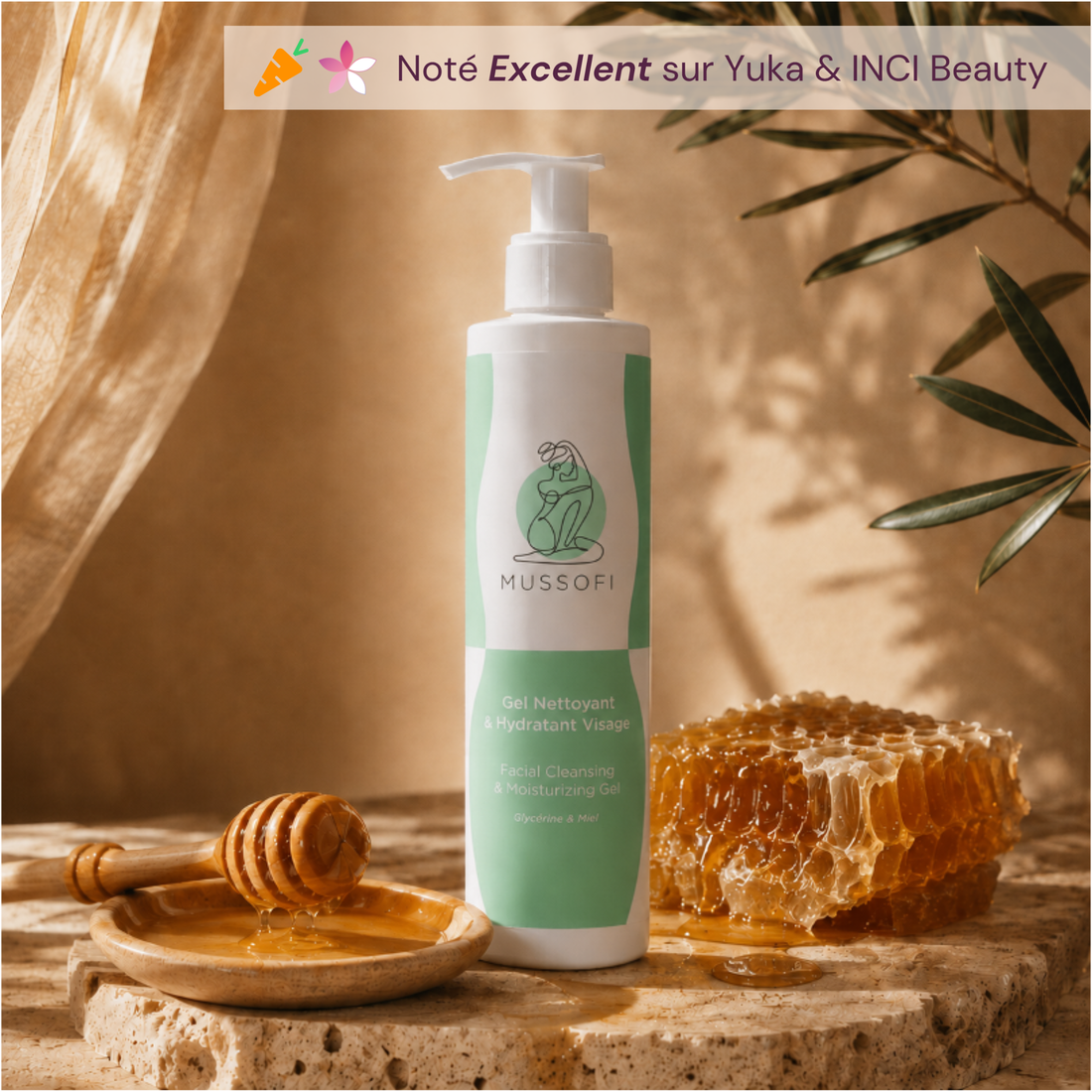
→ Mussofi Hydrating Cleansing Gel — sulfate-free, soothing honeyAnti-spot serum on targeted areas (face)
Every morningApply the serum targeting areas with spots, focusing on marks left by recent bites. Daily regularity is the most decisive factor for results.
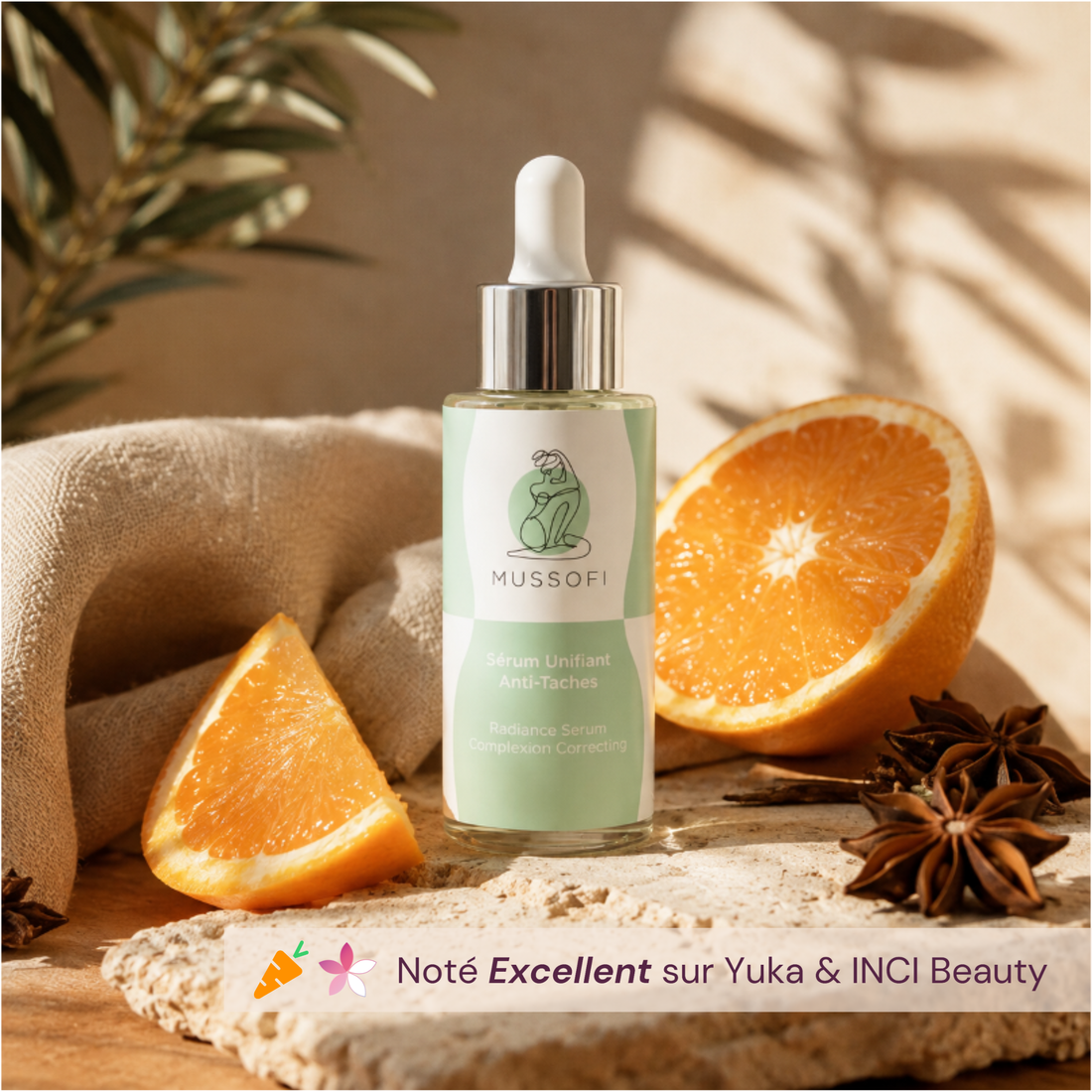
→ Mussofi Brightening Anti-Spot Serum — patent FR3155139 · €41.99Body lotion on body spot areas
Every morning · Focus on affected areasApply Mussofi Body Milk generously, focusing on areas with spots. Its light texture is formulated for the tropical climate — rapid absorption, no greasy effect, no sticky film under the Martinican heat.
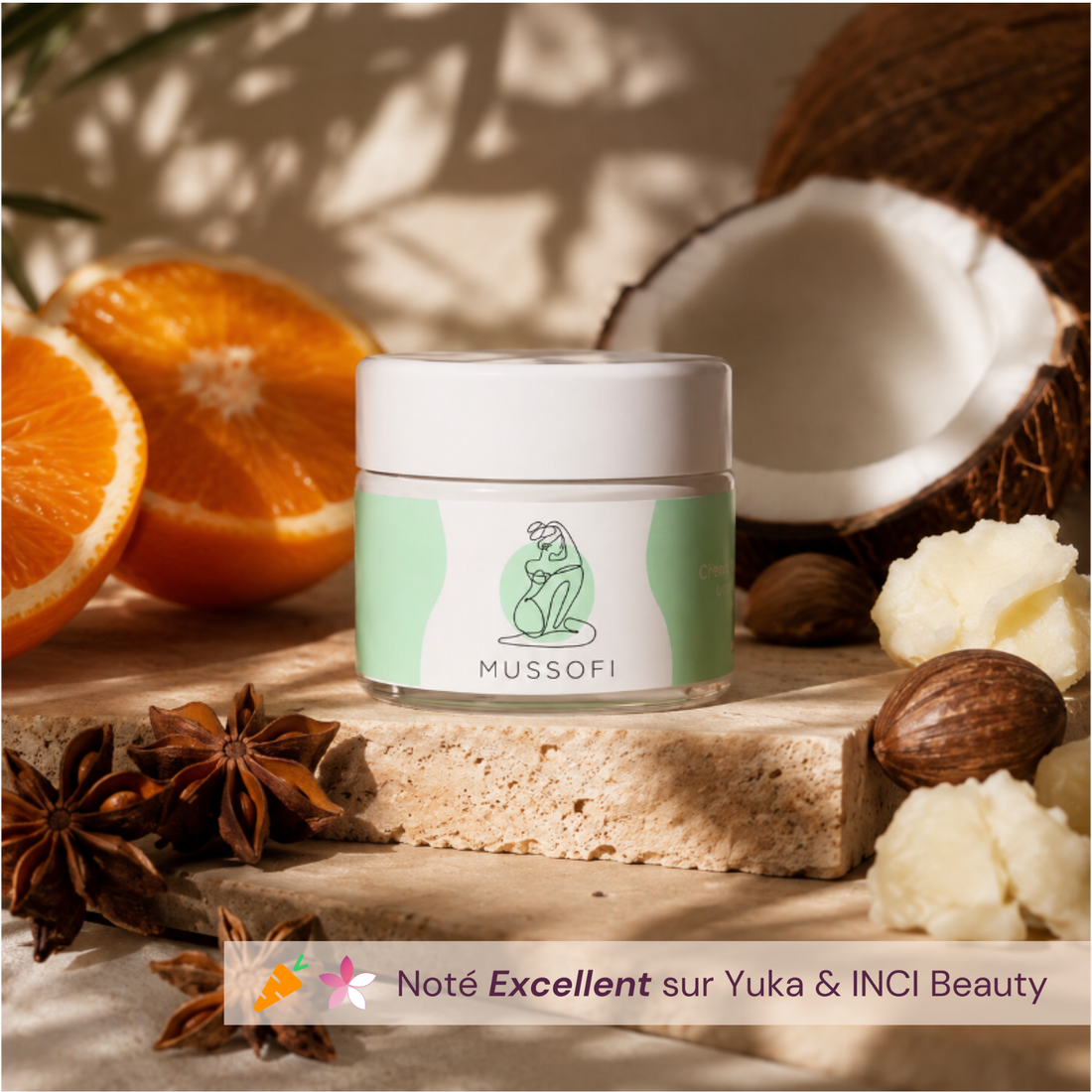
→ Mussofi Brightening Anti-Spot Body Milk — shea, vitamin E, patent FR3155139SPF 50 Sun Protection — absolutely non-negotiable step
Every morning · Before any outingIn Martinique, this step is as important as the treatment itself. Without daily SPF 50 on treated areas, progress will be undone by the tropical sun. Reapply every 2 hours, and systematically after swimming in the sea. Apply mosquito repellent 20 minutes after SPF.
Every Evening
Double cleansing — priority rinsing of sea salt
Every eveningIn Martinique, remove marine salt residues, perspiration, sunscreen, and repellent accumulated during the day. Salt prolongs its dehydrating action as long as it remains on the surface. Skin laden with residues cannot properly absorb evening anti-spot active ingredients.
→ Mussofi Hydrating Cleansing Gel — double evening passGentle exfoliation
1 to 2 times a week · Evening onlyIncorporate a gentle exfoliation to eliminate dead cells and improve the penetration of anti-spot active ingredients. Never more than twice a week on black skin — over-exfoliation triggers new PIH and worsens spots. Always in the evening, never before sun or sea exposure.
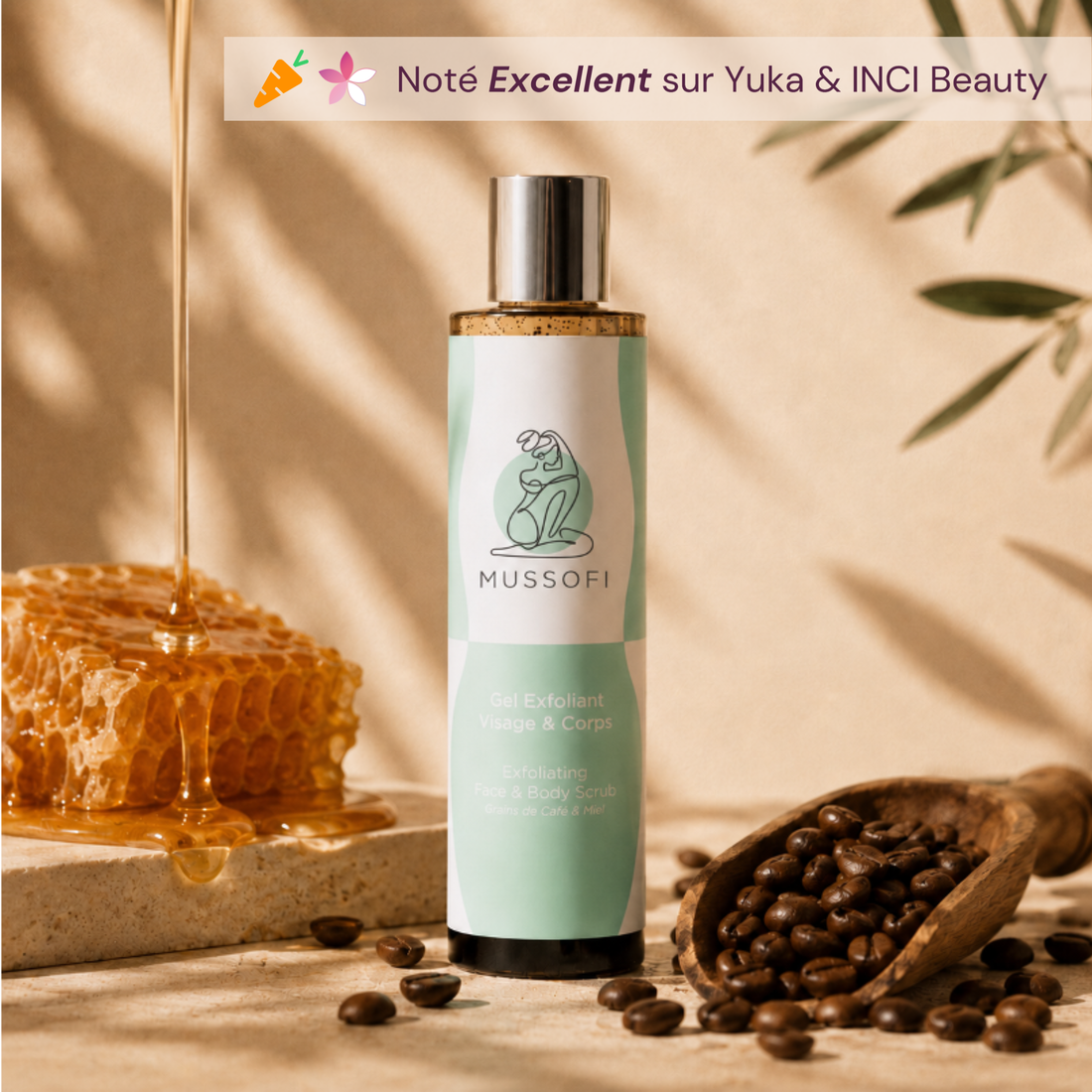
→ Mussofi Coffee & Rhyolite Exfoliating Shower Gel — fine grains, dark phototypesBody lotion for nightly massage
Every eveningApply body lotion in a circular massage to promote the penetration of active ingredients during the night. At night, the skin enters an active cellular regeneration phase — this is when anti-spot active ingredients work most deeply on established melanogenesis.
→ Mussofi Brightening Anti-Spot Body Milk — nightly massage recommendedSeasonal Adaptation to the Martinican Rhythm
Rainy season vs dry season
Adjust the routine to the island's two seasons
Rainy season (July–November): maximum mosquito vigilance. DEET or Icaridin repellents during peak Aedes aegypti activity (dawn and late afternoon). Systematic elimination of standing water. Light textures preferred due to high humidity. Sun protection maintained despite cloud cover — UV rays penetrate 80% of clouds.
Dry season (December–April): enhanced hydration due to drier heat, which dehydrates more. Swimming often intensifies during this period — post-beach protocol is all the more important. SPF 50 sun protection in all circumstances, UV radiation is more direct and constant.
Realistic Timelines Week by Week
Visible improvement in 2 to 3 months
For recent spots less than 3 months old, visible improvement generally appears after 2 to 3 months of regular treatment. Complete disappearance can take 3 to 6 months with diligent routine and rigorous sun protection. Daily regularity and SPF are the two most decisive factors.
Minimum 4 to 6 months, or even 6 to 12 months
Old spots require a minimum of 4 to 6 months — or even 6 months to 1 year depending on the depth of hyperpigmentation, as melanin has migrated deeper into the skin layers. If resistance persists after 6 months of diligent treatment, consult a dermatologist.
Slowed or even nullified progress
Without rigorous sun protection in a tropical context, progress will be significantly slowed or canceled out by the Martinique sun, which continuously stimulates melanin production in treated areas. This is the number one cause of failure for anti-spot treatments in Martinique.
Where to find Mussofi products in Martinique
Points of sale · Martinique
Online with direct DOM-TOM delivery
- Naïmessence — naimessence.fr · Martinique-based shop specializing in natural aroma-cosmetics · Local delivery
- Diouda — diouda.fr · Afro-Caribbean beauty marketplace · Delivery confirmed in Martinique by customers
- Direct order on mussofi.com — delivery to Martinique with taxes and octroi de mer included · free delivery from €70 purchase · 5 to 8 working days delivery time
When to consult a dermatologist in Martinique
Mussofi cosmetic treatments are an effective first line of defense for light to moderate spots. Some situations require professional medical advice.
Consult a dermatologist if: spots resist cosmetic treatments after 6 months of diligent use, if they enlarge or change color, or if you want accelerated results via professional treatments (depigmenting peels adapted for darker skin tones).
Essential precautions: dermatological treatments on black and mixed-race skin require specific precautions to avoid the risk of pigment rebound. Several weeks of skin preparation are usually required beforehand. SPF 50 becomes mandatory for at least 1 month before and after each session.
Dr. Agathe Aoun Coussieu
Fort-de-France
Specialist in black and mixed-race skin. Post-inflammatory hyperpigmentation, keloids, pseudo-folliculitis. Superficial depigmenting peels adapted for darker skin tones.
Dr. Catherine Bervas-Quénéhervé
La médicale de Clairière · Fort-de-France
6 rue des Hibiscus · 05 96 60 18 94. Dermatologist and aesthetic doctor. Peels adapted for darker skin tones, laser treatments, complexion and pigment spots.
Dr. Émilie Baubion
CHU de la Martinique · Fort-de-France
Nationally recognized for her work on dermatological specificities of skin with phototypes IV–VI. Regularly participates in scientific conferences on acne and hyperpigmentation in darker skin tones.
Frequently asked questions
Why does seawater worsen spots on black skin in Martinique?
Sea salt dries the skin through osmotic effect, weakens the hydrolipidic barrier, and prolongs the duration of micro-inflammations. For skin already inflamed by a bite, a swim in salt water without protection intensifies the inflammatory reaction and almost guarantees the formation of a dark spot. Immediate rinsing with fresh water after each swim is the first preventive measure.
Do you really need sunscreen in winter in Martinique?
Yes, absolutely. In Martinique, the UV index remains active and aggressive all year round, even on cloudy days. UV rays penetrate about 80% of clouds. There is no Martinique winter in the sense that the sun would spare the skin. Daily SPF 50 in all seasons.
In what order should I apply serum, sunscreen, and mosquito repellent?
Anti-spot serum → complete absorption (2–3 min) → SPF 50 sunscreen → wait 20 minutes → DEET or picaridin repellent. The ARS Martinique specifies that DEET can reduce SPF effectiveness by about one-third — choose an even higher SPF if necessary.
Is a night mosquito net enough to protect against Aedes aegypti in Martinique?
No. The Martinique Aedes aegypti is active during the day — unlike nocturnal mosquitoes. A night mosquito net alone is insufficient. Protection must be active during daily hours with repellents and clothing covering exposed areas during peak hours.
Are Mussofi products available in Martinique?
Yes. The Mussofi range is accessible via three channels: Naïmessence (Martinique-based shop specializing in natural aroma-cosmetics), Diouda (Afro-Caribbean beauty marketplace), and directly on mussofi.com with taxes and octroi de mer included, free delivery from €70 purchase.
How long does it take to erase recent post-bite spots?
For spots less than 3 months old, visible improvement generally appears after 2 to 3 months of regular treatment with rigorous sun protection. Complete disappearance can take 3 to 6 months. The daily regularity of the routine and SPF determine all results.
Does black skin really need body hydration in Martinique?
Yes. Frequent sea bathing, intense perspiration, and sun create cumulative dryness even in the tropics. Darker skin also has naturally lower ceramide production, making its skin barrier more vulnerable to dehydration. Daily hydration with Mussofi body milk is a pillar of the anti-spot routine.
Dark spots in the French Overseas Departments — each territory, its context
Same phototypes, different entomological realities. Four complete guides adapted to your department.
In Martinique, the triple aggression of bites–sea salt–sun is the most frequent sequence of post-inflammatory hyperpigmentation on black skin.
Dark spots on black skin in MartiniqueFrench Guiana combines four hematophagous species active 24/7 in a permanent equatorial climate — a unique context among the DOM for darker skin.
Dark spots on black skin in French GuianaThe Guadeloupean archipelago exposes darker skin to intense mosquito pressure, amplified by the diversity of micro-environments between Grande-Terre, Basse-Terre, and the islands.
Dark spots on black skin in GuadeloupeIn Reunion Island, the tiger mosquito and epidemic cycles of chikungunya create a specific problem of post-inflammatory hyperpigmentation, depending on altitude and microclimate.
Dark spots on black skin in Reunion Island
Available online · Delivery to Martinique & DOM-TOM
Mussofi Anti-Spot Radiance Range
Face serum + Body milk · Patented formula INPI FR3155139 · Vitamin C + Shikimic Acid · Yuka 100/100 · Taxes & octroi de mer included · Free delivery from €70
Discover the range — delivery to Martinique →